Register Now


Understanding Lung Cancer
What Is Lung Cancer?
Lung cancer is a malignant tumor formed by the abnormal growth of cells in the lungs, usually occurring in the lower respiratory tract, such as in the epithelial cells of the bronchi and bronchioles.
Classification of Lung Cancer
Lung cancer is mainly classified into two categories based on the size of the cancer cells: non-small cell lung cancer (NSCLC) and small cell lung cancer (SCLC). More than 80% of cases are non-small cell lung cancer.
Non-small cell lung cancer (NSCLC)
In 2023, most lung cancer cases in Hong Kong were non-small cell lung cancer (NSCLC), making up about 84%(5130 cases)[1] of all diagnoses. The most common type was adenocarcinoma, which accounted for 63.3%(3867 cases) of cases. This form usually develops in the outer parts of the lungs, often in non-smokers, and tends to grow more slowly, making it easier to detect early. Squamous cell carcinoma, about 8% of cases, is typically found in the airways and is more common among older smokers. Large cell lung cancer was rare, less than 1% of cases, but is more aggressive and harder to treat.
Small cell lung cancer
In 2023, small cell lung cancer (SCLC) accounted for about 5%[1] of lung cancer cases, with 291 people diagnosed. Most patients were smokers. Unlike other types, small cell lung cancer grows and spreads very quickly. Because of this, surgery is usually not an option. Instead, treatment often involves a combination of radiation therapy, chemotherapy, and immunotherapy.
Lung Cancer Statistics in Hong Kong
According to statistics in 2023, the most commonly diagnosed cancer in Hong Kong was lung cancer, with 6,111 cases (16.1%), followed by breast cancer (5,603 cases, 14.8%), colorectal cancer (5,467 cases, 14.4%), prostate cancer (3,031 cases, 8.0%), and liver cancer (1,700 cases, 4.5%). Lung cancer ranked as the leading cancer diagnosis[2]. (Figure 2).
The statistics also show that cancer claimed 14,867 lives in Hong Kong in 2023, accounting for about one-quarter of all deaths. Lung cancer was the leading cause, responsible for 3,880 deaths, or 26.1% of the total[2]. (Figure 3).
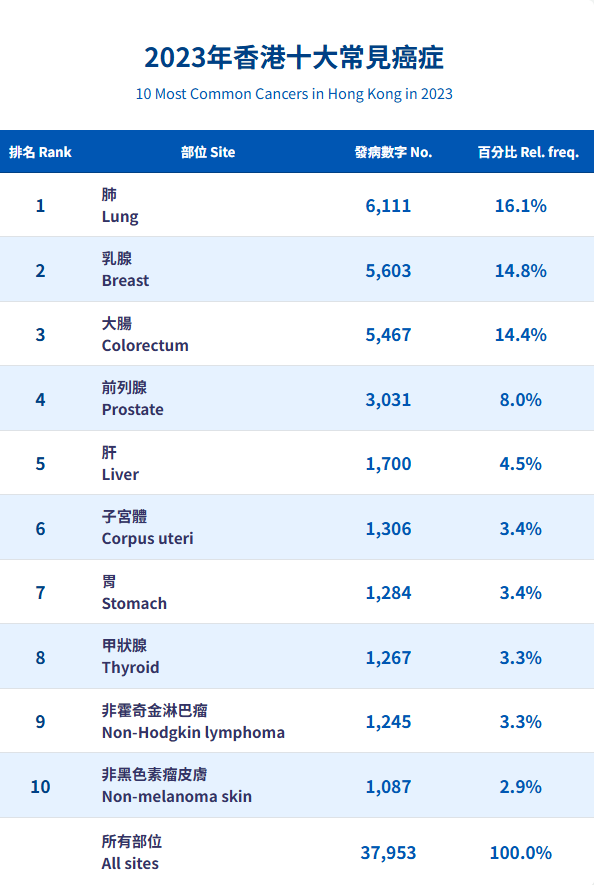
Figure 2. 10 Most Common Cancers in Hong Kong in 2023
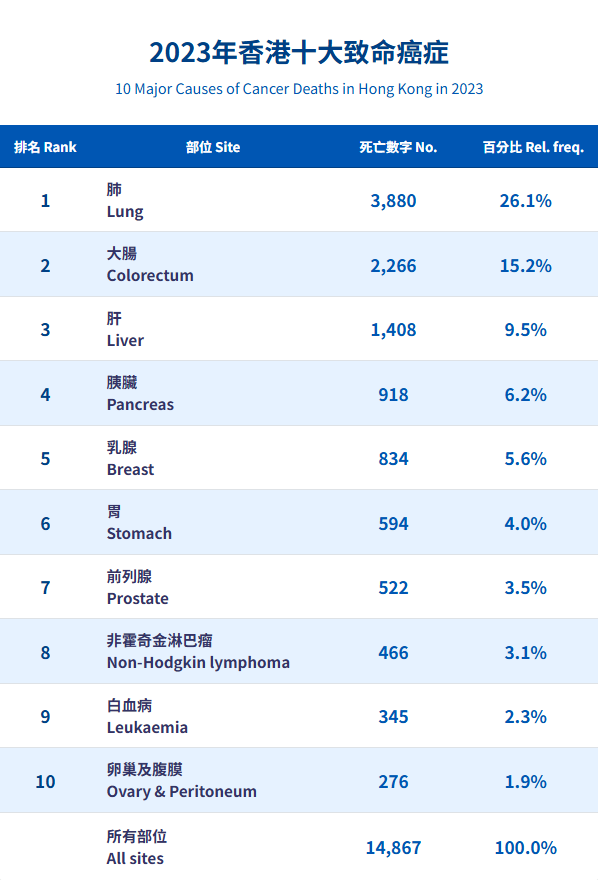
Figure 3. 10 Major Causes of Cancer Deaths in Hong Kong in 2023

Typical Symptoms of Lung Cancer
Most early-stage lung cancers have no obvious symptoms. As the disease progresses, the following may appear[3][4][5][6]:
- Persistent cough
- Haemoptysis (coughing up blood or blood-stained phlegm)
- Recurrent or persistent chest infections
- Wheezing or shortness of breath
- Hoarseness
- Chest discomfort or pain on coughing, deep breathing or laughing
- Unexplained fatigue
- Unexplained loss of appetite and weight
- Metastatic symptoms: swollen neck lymph nodes, swelling of face/neck/limbs, abdominal distension, bone pain, headache, focal seizures or hemiparesis (weakness on one side of the body)
Risk Factors of Lung Cancer
Lung cancer is more common in male aged 40+. Key risk factors include[4][5][6]:
- Tobacco smoking
- Aged 50 or above
- Second-hand smoke exposure
- Air pollution (outdoor and indoor)
- Occupational carcinogens (radon, asbestos, nickel, chromium compounds)
- History of lung disease (e.g. COPD)
- Family history of lung cancer, especially first-degree relatives
Prevention of Lung Cancer
- Do not smoke, smokers have 22 times higher lung cancer risk than non-smokers[3][4][5][6][7]
- Quit smoking[3][4][5][6], risk falls progressively the longer you quit
- Avoid second-hand smoke[3][4][5][6]
- Follow occupational safety guidelines and use respiratory protection[3][4][5]
- Consume adequate fruit and vegetables (may reduce risk by 8–18% in smokers)[8]
- Exercise regularly (may reduce overall risk by 26%)[9]
References
- Hong Kong Cancer Registry, Hospital Authority. Lung Cancer in 2023. 2025. Available at: https://www3.ha.org.hk/cancereg/pdf/factsheet/2023/lung_2023.pdf. Accessed on 02 February 2026.
- Hong Kong Cancer Registry, Hospital Authority. Leading Cancer Sites in Hong Kong in 2023. 2025. Available at: https://www3.ha.org.hk/cancereg/pdf/top10/rank_2023.pdf. Accessed on 02 February 2026.
- World Health Organization. Lung cancer. 2023. Available at: https://www.who.int/news-room/fact-sheets/detail/lung-cancer. Accessed on 02 February 2026.
- Centre for Health Protection of the Department of Health. Lung Cancer Prevention and Screening. 2025. Available at: https://www.chp.gov.hk/files/pdf/6_lung_cancer_prevention_and_screening_eng.pdf. Accessed on 02 February 2026.
- Cancer Online Resource Hub. Lung Cancer. Available at: https://www.cancer.gov.hk/en/hong_kong_cancer/common_cancers_in_hong_kong/lung_cancer.html. Accessed on 02 February 2026.
- Centre for Health Protection of the Department of Health. Men's Health Line - Lung Cancer. Available at: https://www.chp.gov.hk/en/static/80049.html. Accessed on 02 February 2026.
- World Health Organization. Don't let tobacco take your breath away: choose health, not tobacco: 31 May, World tobacco day. 2019. Available at: https://iris.who.int/handle/10665/312260. Accessed on 02 February 2026.
- Vieira AR, Abar L, Vingeliene S, et al. Fruits, vegetables and lung cancer risk: A systematic review and meta-analysis. Annals of Oncology 2016; 27(1):81-96.
- Moore SC, Lee IM, Weiderpass E, et al. Association of leisure-time physical activity with risk of 26 types of cancer in 1.44 million adults. JAMA internal Medicine 2016; 176(6):816-825.
Organised by:


Funded by:

Co-organised by: